Serving Texarkana, TX and surrounding areas. (430) 278-0192
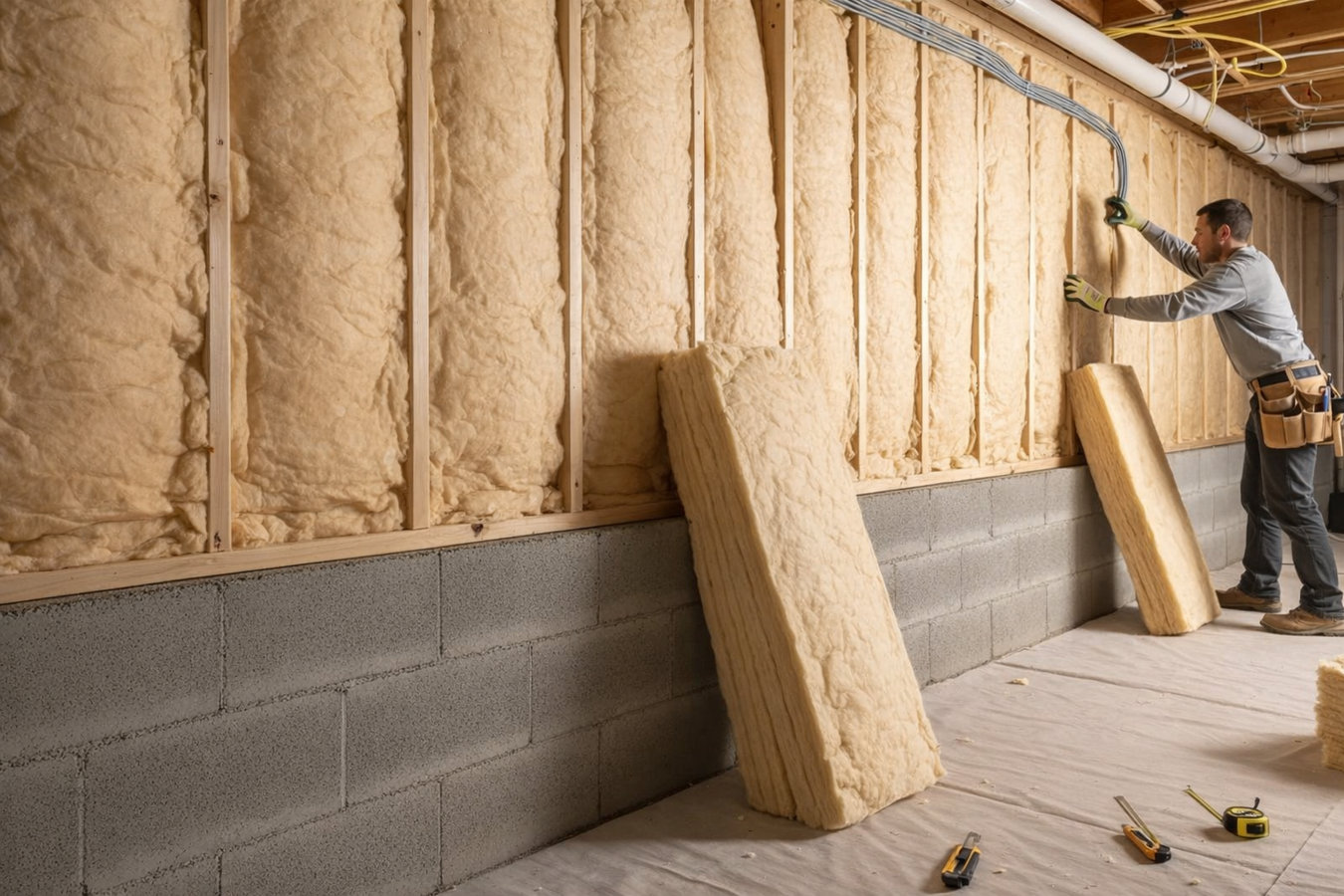
Cold floors, high cooling bills, and musty smells often trace back to an uninsulated basement. We fix that with proper materials and real moisture management.
Basement insulation in Texarkana creates a thermal barrier between your lowest level and the living spaces above, most projects run one to two days from start to finish with the crew working entirely in the basement.
If your floors feel cold in winter or your cooling bills seem high all summer, an uninsulated basement is often the reason. Texarkana homes - especially those built before 1980 - frequently have bare foundation walls and floor joists that let heat escape in winter and seep back in during the long summer. Pairing basement insulation with crawl space insulation addresses the full lower envelope of older homes in one coordinated project.
Before any material goes in, a qualified contractor checks for moisture. In Texarkana's humid climate, insulating over a damp wall makes problems worse, not better - so moisture assessment is part of the job, not an afterthought.
If your kitchen or living room floor feels cold in winter even with the heat running, the basement ceiling above it likely has little or no insulation. Cold radiates upward from an uninsulated floor system. This is one of the most common complaints homeowners notice before they realize the basement is the source.
An uninsulated basement is one of the biggest reasons a Texarkana home loses the battle against summer heat. If your utility bills feel out of proportion to the size of your home, or your HVAC runs constantly without getting comfortable, the basement is worth investigating. Insulating it is often one of the highest-return improvements you can make.
A persistent musty odor signals moisture in the basement - and moisture and insulation do not mix well. In Texarkana's humid climate, basements that are not sealed and insulated can develop condensation on walls and surfaces, which eventually leads to mold. If you are smelling something that was not there before, have a contractor look before the problem spreads.
White powdery residue on concrete or block walls - called efflorescence - means water has been moving through the wall and leaving mineral deposits behind. This is especially common in Texarkana homes built on clay soils, where ground movement pushes moisture against foundation walls. It signals that moisture management must be part of any insulation plan.
We insulate both the walls of the basement - the foundation walls - and the ceiling of the basement, which is the floor of the room above. Which approach makes more sense depends on whether your basement is conditioned or left unfinished. For Texarkana homes where moisture is a concern, we often recommend closed-cell foam insulation on foundation walls because it acts as both a thermal and moisture barrier in one application.
Where spray foam is not the right fit - for finished basements or where budget is a priority - we work with rigid foam board and batt insulation as well. Every project starts with an air-sealing pass around pipes, joists, and foundation penetrations. Skipping that step means even the best insulation underperforms. If your lower level already has a bare crawl space rather than a full basement, our team can help you connect that work to a crawl space insulation project for whole-home coverage below the living floor.
Best suited for unfinished or partially finished basements where the concrete or block walls are exposed and accessible.
Ideal for homes with unheated basements where insulating the floor above keeps the living space warmer without conditioning the basement itself.
Targets the perimeter framing where the floor meets the foundation - one of the most common air leak locations in older Texarkana homes.
The complete approach for older homes with gaps around pipes, joists, and utility penetrations that let conditioned air escape before insulation even has a chance to work.
Texarkana sits in a hot-humid climate zone where summer humidity regularly climbs above 70 percent, and that moisture does not stop at your foundation walls. The area also sits on clay-heavy soils that expand when wet and shrink when dry - a cycle that creates ongoing pressure on basement walls and can open hairline cracks over time. Those cracks become pathways for moisture, which is why the insulation material your contractor recommends matters so much here. Some types handle humidity well, while others absorb moisture and lose their effectiveness.
A large share of Texarkana's housing stock was built before modern energy codes were in place, and older homes in areas like Nash, TX and Wake Village, TX often have more gaps around pipes and joists than newer construction. Those gaps mean a thorough air-sealing pass before insulation makes a bigger difference in these homes than anywhere else. Texas also does not require a building permit for most straightforward residential insulation work, so projects can typically be scheduled and completed without waiting on city approvals. Your contractor should confirm whether a permit applies to your specific job before any work begins.
We respond to all inquiries within one business day. A quick conversation covers the basics - size of your basement, finished or unfinished, and what is prompting the call. You do not need to have answers prepared before we talk.
A technician walks through your basement and checks the walls, ceiling, any existing insulation, and signs of moisture or air leaks. This visit takes about 30 to 60 minutes and happens before any pricing is discussed.
You receive a written estimate that breaks down what work will be done, what materials will be used, and the total cost. If you are comparing quotes, make sure each one covers air sealing and insulation together - not just one or the other.
Most basement jobs are finished in a single day. The work stays entirely in the basement, so the rest of your home stays usable. We clean up before we leave, and the space is ready to use immediately - no curing period.
Free estimate. No obligation. We respond within one business day.
(430) 278-0192We check your basement walls and floor for signs of moisture intrusion before recommending a material. Insulating over a damp wall creates a mold problem you will not find until it is expensive to fix - so we address moisture first, always.
We have worked in Texarkana's neighborhoods long enough to know the clay soil conditions, the age of the housing stock, and the moisture patterns that affect basements here. That local experience shapes every recommendation we make.
We seal gaps around pipes, joists, and penetrations before insulation goes in. Skipping this step is the most common reason insulation underperforms - and we do not skip it. The job is only done when the air barrier and the insulation work together.
We document the insulation and air sealing we complete in your basement. You get a clear record of what was done, which gives you a reference point if you ever sell your home or need to revisit the work down the road.
Getting basement insulation right in Texarkana requires more than choosing a material - it requires understanding the local climate, the age of your home, and the moisture risks specific to this part of East Texas. We bring all three to every project we take on.
A high-performance option that seals air and blocks moisture in one application - often the best choice for Texarkana basements with humidity concerns.
Learn MoreAddresses the floor system from below, combining insulation and vapor control to protect your home from ground moisture year-round.
Learn MoreTexarkana's cooling season comes fast - lock in your installation date now and feel the difference on your first summer electric bill.