Serving Texarkana, TX and surrounding areas. (430) 278-0192
Your crawl space has a direct line to your living room. When it is uninsulated or poorly sealed, Texarkana heat and ground moisture rise through your floors all summer. We fix that.
Crawl space insulation in Texarkana, TX is a layer of material installed beneath your floor that blocks heat, cold, and ground moisture from rising into your living space, with most projects completed in one to two days. Without it, your air conditioner fights ground heat all summer, your floors feel warm and stuffy, and moisture from Bowie County clay soils works its way up into the structure of your home.
A large share of Texarkana homes were built with vented crawl spaces in the 1950s through 1980s - a method that pulls in humid outside air rather than keeping it out. If your home is more than 30 years old and has never had crawl space work done, there is a good chance the original insulation has sagged, absorbed moisture, or failed entirely. Pairing crawl space insulation with a crawl space vapor barrier addresses both the heat and the moisture problem at once, which is the standard we recommend for this climate.
If your floors feel noticeably warm to the touch during Texarkana's long hot summers - or if the air near the floor seems stale or humid - heat and moisture from below are getting through. This is especially common in older homes where the crawl space was never sealed or where original insulation has sagged. Your crawl space is working against your air conditioner rather than helping it.
A persistent earthy or damp odor in your home - especially in rooms over the crawl space - is one of the clearest signs that moisture is building up below your floor. In Texarkana's humid climate, that moisture creates ideal conditions for mold and mildew to grow on wood and insulation. The smell often gets worse in spring and after heavy rain, when ground moisture is highest.
If your energy costs have crept up over the past year or two and nothing obvious has changed, crawl space insulation that has gotten wet, compressed, or fallen away is a likely cause. Insulation that fails loses most of its ability to slow heat transfer, forcing your HVAC system to work harder. This pattern is common in Texarkana homes that are 20 or more years old.
If you peek through your crawl space access hatch and see bare ground, torn or sagging material hanging from the floor joists, water droplets on pipes, or dark staining on wooden beams, the insulation system has broken down. In Bowie County clay soil, moisture accumulation after wet seasons is common and leads to wood rot, pest attraction, and insulation failure.
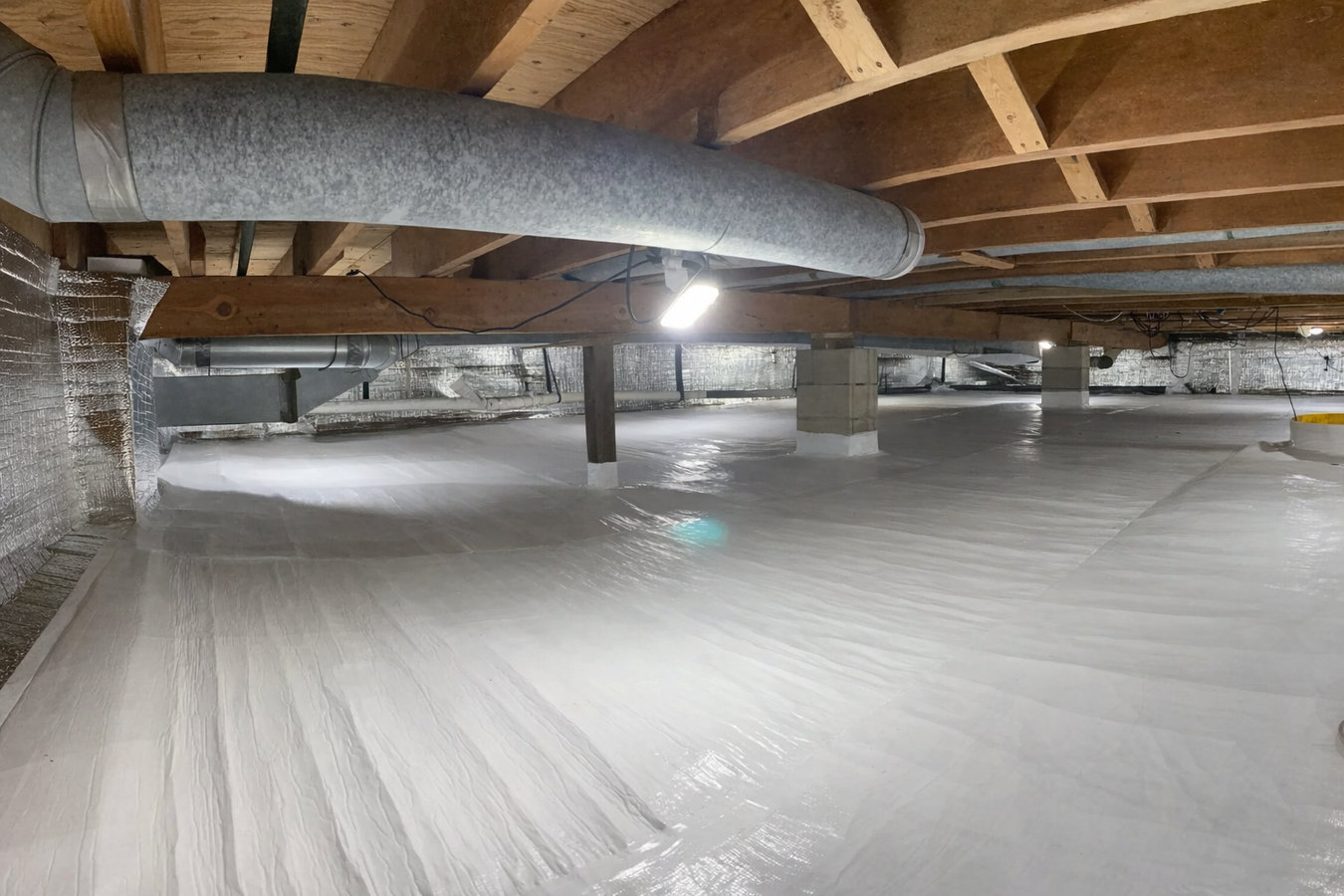
We offer two main approaches to crawl space insulation, and we recommend the right one based on your home, not a price list. The traditional method installs insulation between the floor joists - the wooden beams holding up your floor - and is effective in spaces with good moisture control already in place. The encapsulation approach seals the entire crawl space with a heavy plastic barrier and insulates the walls, turning it into a controlled environment. In Texarkana, where Bowie County clay soils hold water close to the foundation and humidity stays high for much of the year, encapsulation is often the stronger long-term solution.
Both approaches can be paired with a crawl space vapor barrier for complete moisture control, and with wall insulation for homeowners who want to address heat loss throughout the entire building envelope. We also handle any removal of old, damaged crawl space material before new insulation goes in. See the U.S. Department of Energy guidance on insulation for background on R-values and crawl space standards.
Best for crawl spaces with dry conditions and good foundation venting, where moisture is not an active concern.
Recommended for Texarkana homes where ground moisture is persistent - it seals the space and addresses the problem at the source.
Paired with insulation to protect wood framing and insulation from Bowie County's clay-heavy, water-retaining soils.
Texarkana summers run long and hot, with average highs regularly above 90 degrees F from June through September. For most homeowners here, cooling costs are the dominant energy expense - not heating. A properly insulated and sealed crawl space reduces the load on your air conditioning by blocking heat from the ground and outside air from rising into your living space. But the heat is only half the problem. Bowie County soils are clay-heavy, which means they hold water rather than drain it. After heavy rain, that water sits near your foundation and works its way into the crawl space as vapor. Homeowners in lower-lying areas near Bringle Lake or the Red River watershed see this effect most often. We serve homeowners throughout Nash, TX and Wake Village, TX, where these same soil and moisture conditions affect crawl spaces across many older neighborhoods.
Many Texarkana homes in established neighborhoods - including areas built in the 1950s through 1980s - were designed with vented crawl spaces that pull in outside air rather than seal it out. That approach was standard at the time, but it is now understood to increase moisture problems in humid climates like this one. Older homes with original crawl space insulation have typically had decades of heat and humidity cycling through the space, and the material has often compressed, sagged, or fallen away entirely. A straightforward inspection through the access hatch will usually tell you quickly whether what is there is still doing its job.
We will ask your address, the approximate size of your home, and whether you have noticed moisture, musty smells, or comfort issues. We respond within 1 business day and schedule your in-person estimate at a time that works for you - no cost, no commitment.
A contractor visits your home and inspects the crawl space directly - not just from the hatch. They check existing insulation, look for signs of moisture or mold, measure the space, and assess how accessible it is. This usually takes 30 to 60 minutes, and you will get a full explanation before they leave.
You receive a written estimate that spells out exactly what work will be done, what materials will be used, and the total cost - including whether moisture control or vapor barrier work is included. A trustworthy contractor will not pressure you to sign on the spot.
The crew enters through the access hatch, removes any old damaged material, and installs new insulation and any vapor barrier work agreed upon. Most jobs take one to two days. When done, the contractor walks you through what was completed - either in person or with photos - and the area around the hatch is left clean.
We respond within 1 business day - no pressure to move forward. After you submit, someone from our office contacts you to schedule a free crawl space assessment at a time that works.
(430) 278-0192We document the crawl space work we complete and follow recognized industry standards on every job. You get a clear record of what was done before we leave. TheENERGY STAR seal and insulate guide is another resource worth reviewing to understand what a complete job looks like.
We inspect your crawl space for moisture, mold, and ground water conditions before recommending an approach. In Texarkana's climate, skipping this step leads to insulation that fails within a few years. Our estimates reflect what your specific space actually needs.
A large share of Texarkana's housing stock dates from the postwar era through the 1970s. We know what these homes look like underneath - what conditions to expect and what the right approach is for older vented crawl spaces that were never designed with moisture control in mind.
Before any work begins, you receive a written estimate that covers the full scope - insulation, vapor barrier work if needed, removal of old material, and cleanup. There are no add-ons at the end of the job that were not in the original quote.
Crawl space work is out of sight - which means it is easy to do poorly and hard for a homeowner to verify. We address that by walking you through the assessment findings before quoting, and showing you the finished space after installation, so you know exactly what was done and why.
Once your crawl space is sealed, wall insulation is the next layer that keeps your home truly airtight.
Learn MorePair insulation with a ground vapor barrier for complete moisture control beneath your floors.
Learn MoreTexarkana summers are long - get your crawl space assessed before peak heat season and start saving on cooling costs sooner.